
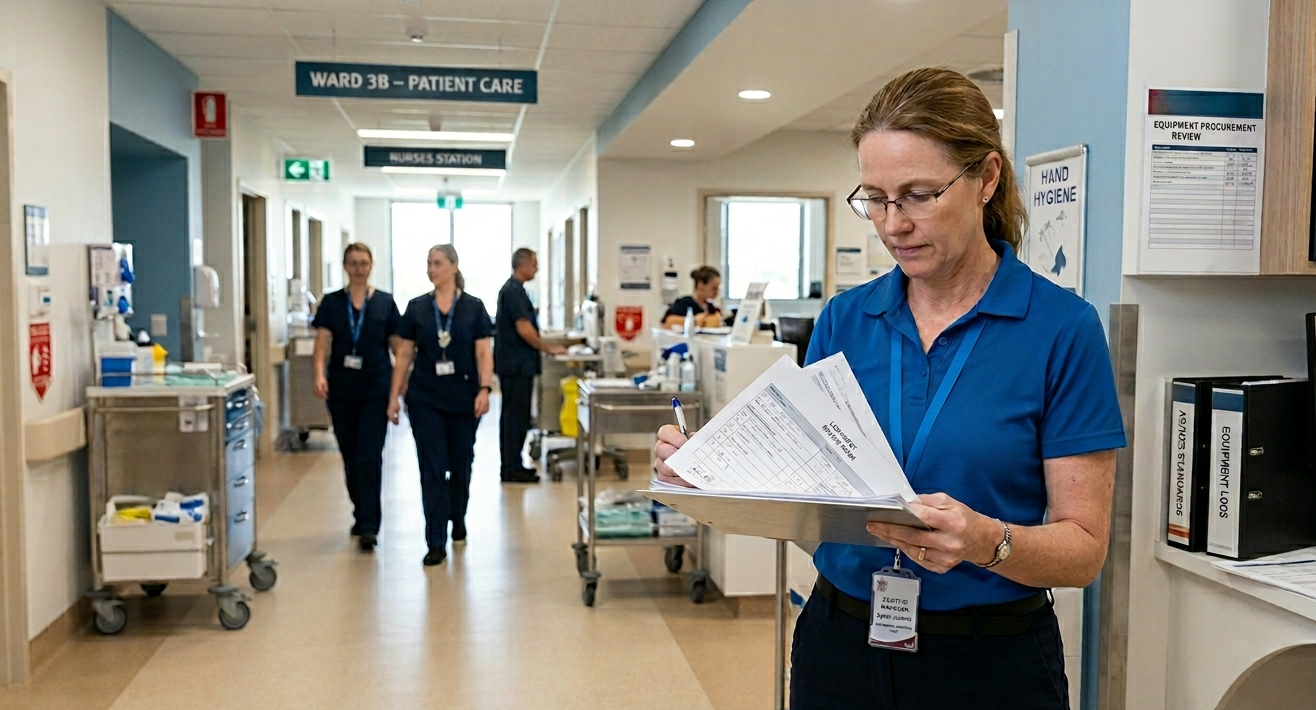
Why capital spend clusters at the end of the financial year
Australian healthcare facilities, both public and private, operate on a 1 July to 30 June financial year. Capital budget allocations, covering clinical furniture, emergency equipment, and patient handling infrastructure, are assigned at the start of the year. Unspent allocation generally does not roll over; it lapses when the financial year closes.
In practice, capital budgets are often partially unspent by late June. Evaluation processes that began in February get delayed. Supplier quotes take longer than expected. Competing operational demands push procurement conversations back. The result is a concentrated decision-making window in the final weeks of June each year, when the urgency to act and the internal authority to approve are both at their highest.
For procurement teams and facility managers, the question is how to act within a narrow window without bypassing governance.
Capital vs consumable spend at EOFY
Capital equipment (furniture, carts, patient handling equipment, pressure care systems) is typically funded from a separate capital allocation and can be committed with a formal purchase order before 30 June, even if delivery occurs in early July. Consumables under standing tender contracts are generally not subject to the same EOFY urgency and should be ordered through normal procurement cycles regardless of the time of year.
What works and what does not at late EOFY
Not all procurement can be compressed into the final weeks of June. The equipment categories that move through EOFY windows effectively share a few characteristics: they are in stock and available to quote, they do not require custom configuration or extended clinical evaluation, and the decision-making authority within the facility is clear.
Patient transfer and transport equipment, emergency response furniture, clinical seating, pressure care mattresses, and overnight accommodation for carers are categories that typically fit this profile. These are well-defined products with clear clinical applications, and procurement decisions can generally be supported by a datasheet and a conversation with a sales consultant rather than a multi-month evaluation process.
Equipment that requires a tender evaluation, a multi-site clinical trial, custom drawer configurations, or extended supplier lead times is not suited to a late-EOFY purchase. Attempting to compress those processes into a week creates compliance risk and delays delivery into the new financial year. The better use of that time is to open the evaluation conversation early so the procurement is positioned for the first quarter of the new financial year.
The most effective EOFY capital purchases address a known clinical gap with in-stock equipment, move through a clear approvals process, and are raised as a formal purchase order with enough lead time for internal sign-off before 30 June.
Moving through approvals without bypassing governance
Late-EOFY procurement does not need to mean rushed procurement. A structured approach to the final weeks of June produces better outcomes than leaving decisions to the last few days.
The first step is confirming the unspent allocation figure and the delegated authority threshold for capital items in your department or facility. Many healthcare organisations have tiered approvals structures that allow ward managers or department heads to approve capital items under a certain value without committee sign-off. Knowing the threshold in advance removes a common bottleneck.
The second step is requesting formal quotes early in the final week of June, not on 30 June itself. A quote in hand by the Tuesday or Wednesday of the final week provides enough lead time for internal approvals to be completed and a purchase order raised before the year closes.
The third step is confirming the delivery and accounting treatment with both the supplier and your finance team at the time of quoting. In most Australian healthcare organisations, a purchase order raised and approved before 30 June is sufficient to commit the expenditure against the current financial year, regardless of when physical delivery occurs. Your finance team can confirm the specific treatment that applies to your facility.
Equipment categories suited to EOFY capital procurement
The following categories are well-suited to late-EOFY capital procurement in Australian healthcare settings.
It is also worth considering equipment that completed a clinical evaluation earlier in the year but was deferred due to budget timing. If the evaluation work is done, the decision is financial rather than clinical, and EOFY is often the right moment to revisit it.
-
Patient transfer and transport
Tweegy transfer chair by Promotal

Safe patient movement within facilities is a WHS compliance requirement. Transfer chairs are low-evaluation capital purchases with a clear clinical application and a direct link to manual handling obligations under Australian WHS legislation. Promotal has a long-standing reputation for patient safety in transfer chair design, with the Tweegy developed in direct response to clinical feedback from healthcare facilities.
Capacity200 kgStackingSaves up to 48% spaceHandlingRear-weighted centre of gravityAccessoriesIV pole, headrest, harnessCompact and stackable, with a rear-weighted centre of gravity for easier staff handling. Accessories including a rotating IV pole, headrest, and harness are configurable at time of order or added later. Confirm current availability with your sales consultant.
-
Emergency readiness
Aurion emergency and medication carts
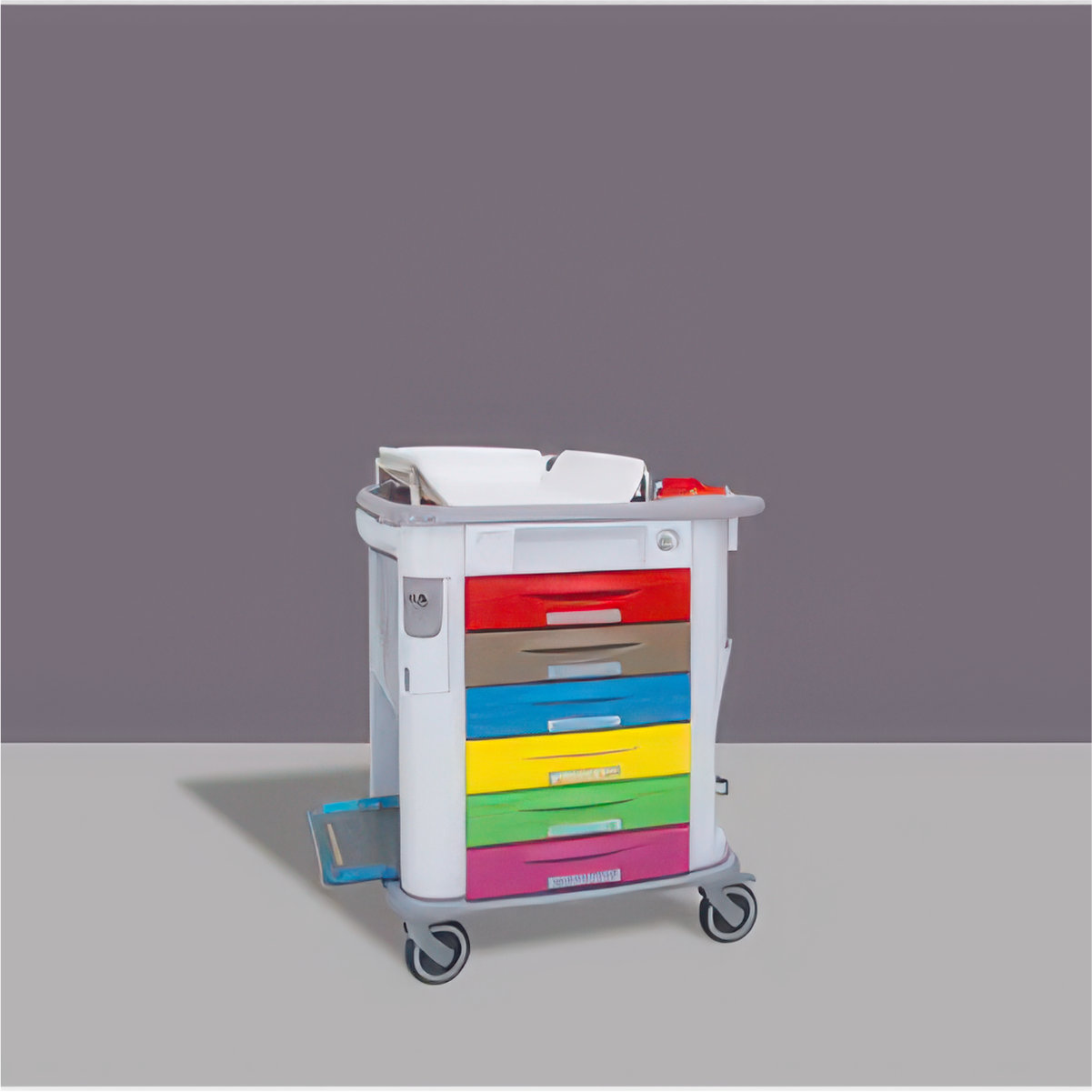
Consistent cart configuration across ED, ICU, and ward settings reduces handling time under pressure and supports restocking compliance. Where a facility has aging or inconsistent cart layouts, EOFY is a practical point to standardise. It is also a practical opportunity to expand an existing fleet, adding carts to wards or departments that have been operating with insufficient numbers.
Body optionsCompact and MegaDrawer heights100, 150, 200, 300 mmLockingKey, seal, or electronicCertificationISO 13485 / ISO 9001Aurion trolleys are manufactured in Baydur Polyurethane, which is chemical-inert, scratch and impact resistant, and compatible with aggressive disinfectants. Colour-coded drawer configurations allow consistent layouts across clinical areas. All Aurion trolleys are latex-free. Confirm current model availability with your sales consultant.
-
Clinical furniture
Stargazer chair-bed by Repose
Many facilities manage carer overnight stays by placing a spare hospital bed in the patient room. This ties up a capital asset, creates a trip hazard for both staff and patients in an already confined space, and generates an infection control burden that a purpose-built solution avoids.
The Stargazer by Repose is a chair by day and a full-length flat bed by night, suited to wards across the facility, including maternity, paediatric, and hospice settings, as well as relatives' rooms.
Bed length206 cmChair footprint87 cm wide × 84 cm deepSafe working load160 kgWarranty2 years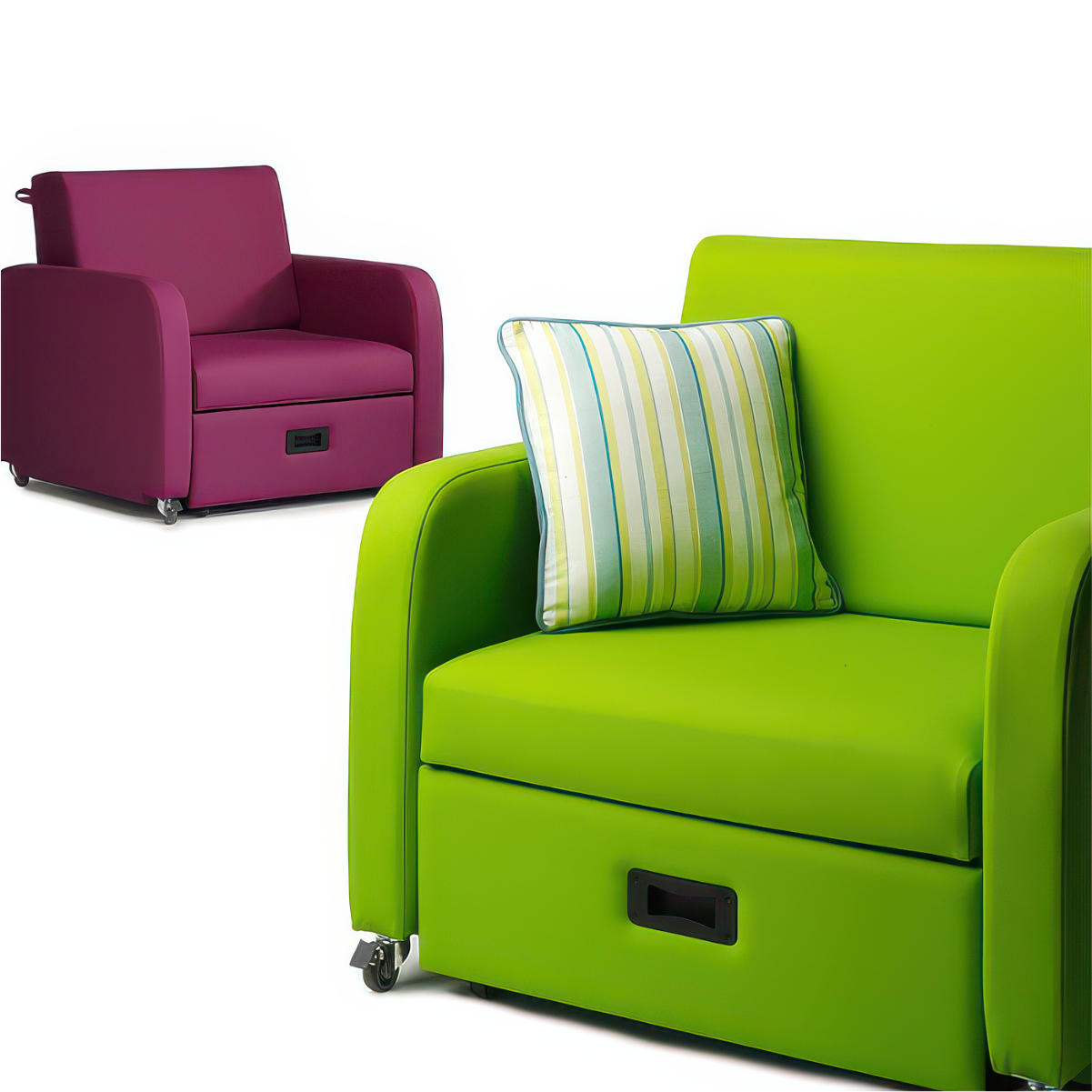
Chair configuration for daytime use 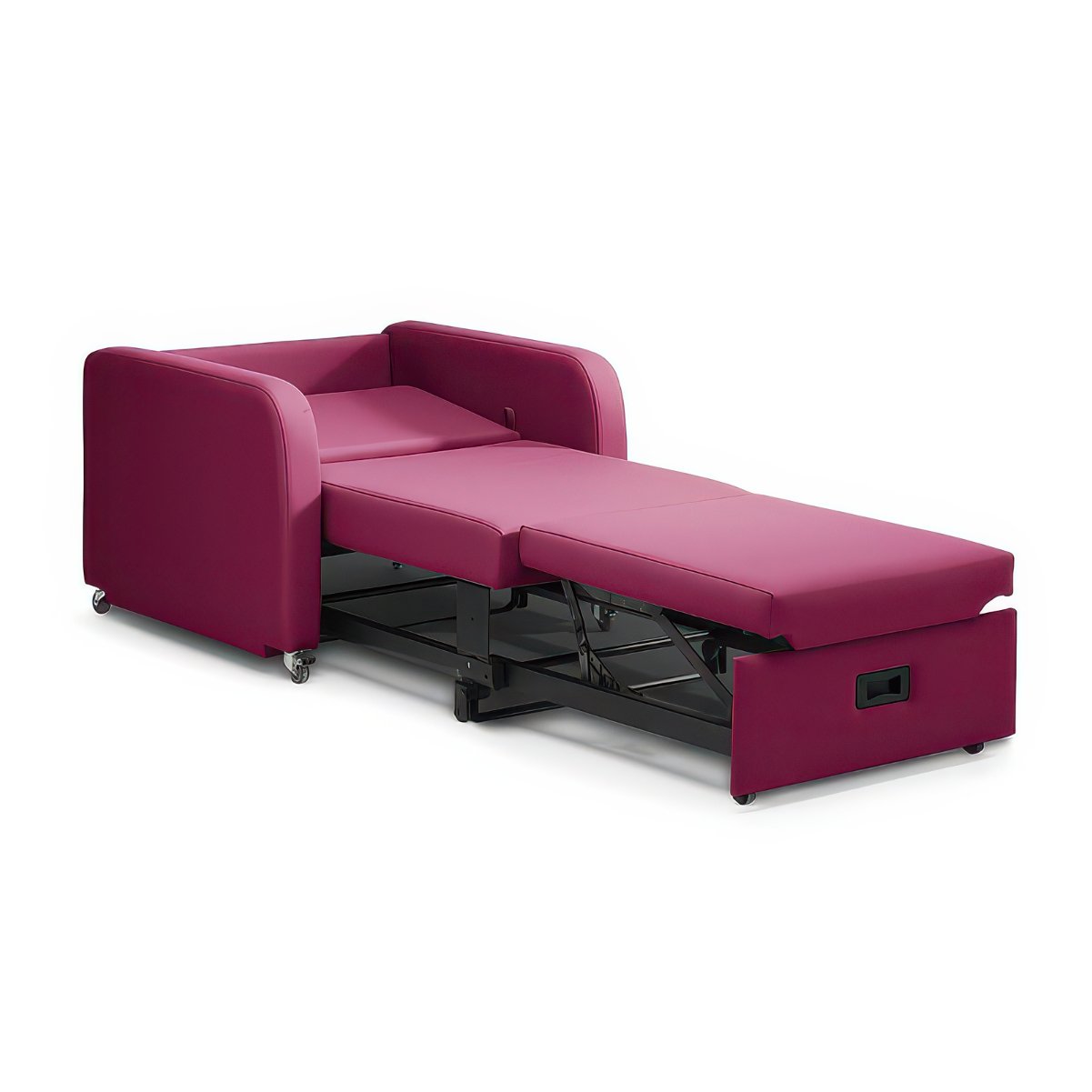
Extended to full flat bed (206 cm) for overnight use The Stargazer can be funded from capital allocation rather than competing with operational budgets, and it displaces the need for a dedicated spare bed in the room. Upholstery is bleach cleanable and antimicrobial, with PERMABLOK3 vinyl available for high-demand infection control environments. Available through Midmed; confirm current availability with your sales consultant.
Pressure care and consumables
-
Pressure care
Pressure injury prevention systems
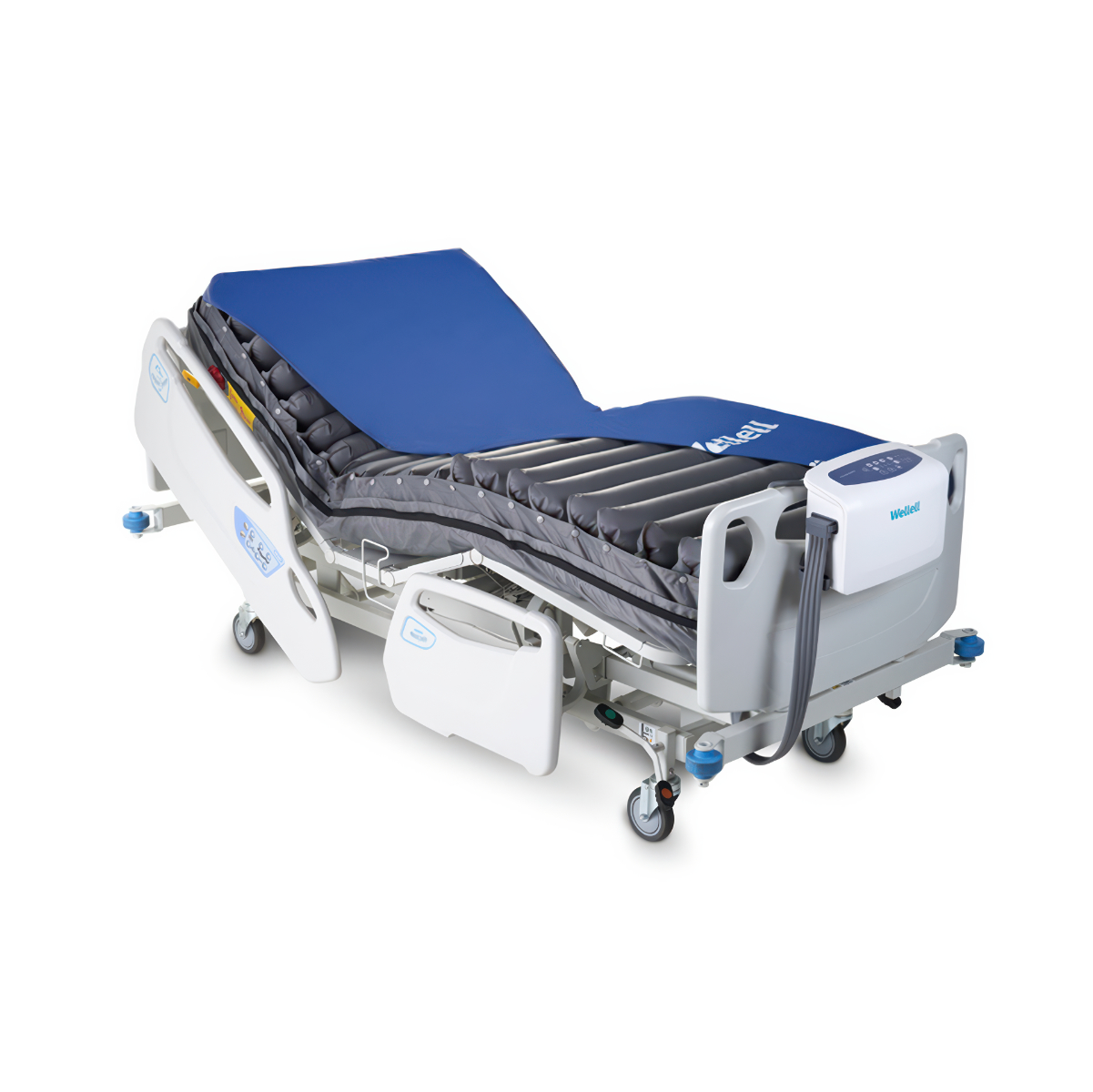
Pressure injury prevention is an ongoing clinical and accreditation requirement. Alternating pressure mattress systems for ICU, spinal, rural/remote, and high-dependency settings can often be evaluated against existing bed infrastructure without a lengthy compatibility process.
ProductWellell Pro-care rangeBed compatibilityHill-Rom, Arjo, Umano MedicalSettingsICU, spinal, high-dependency, rural/remoteConfirm compatibility with your bed fleet before ordering. Available through Midmed; speak with your sales consultant to confirm current availability and compatible models for your infrastructure.
EOFY capital procurement checklist
Use this checklist each year when managing capital allocation in the final weeks of June.
- ✓Confirm the unspent capital allocation figure and the delegated authority threshold for your department or facility
- ✓Identify clinical or operational gaps that can be addressed with in-stock, ready-to-quote equipment requiring minimal evaluation
- ✓Separate items suitable for the current EOFY window from those that require a full evaluation and should be positioned as new FY priorities
- ✓Request formal quotes from suppliers early in the final week of June, allowing sufficient time for internal approvals
- ✓Confirm the accounting treatment for purchase orders raised before 30 June with delivery in early July
- ✓For equipment deferred to the new financial year, initiate supplier evaluation conversations in late June or early July while budget planning is active
Frequently asked questions
Can capital equipment be committed to the current financial year if delivery occurs after 30 June?
In many Australian healthcare organisations, a purchase order raised and approved before 30 June is sufficient to commit the expenditure against the current financial year, even if physical delivery occurs in early July. The specific accounting treatment varies by organisation. Confirm with your finance team before relying on this for budget planning.
What types of equipment are suited to a late-EOFY capital purchase?
Equipment that is in stock, requires minimal clinical evaluation, and can be approved under a delegated authority threshold is generally suited to a late-EOFY purchase. Patient transfer aids, emergency carts, clinical seating, overnight accommodation furniture, and pressure care systems are common examples. Equipment requiring a tender evaluation, multi-site clinical trial, or extended lead time is not suited to a late-June window.
How far in advance should a quote be requested for late-EOFY procurement?
Requesting a quote by Tuesday or Wednesday of the final week of June is a practical target. This allows enough time for the quote to be reviewed, internal approvals to be obtained, and a purchase order to be raised before the financial year closes. Leaving quote requests until 30 June itself creates unnecessary risk that the internal approvals process cannot be completed in time.
What should a facility do with capital equipment that cannot be purchased before 30 June?
Treat it as a new financial year priority. Start the evaluation conversation with suppliers in late June or early July while budget planning is active, so the procurement is ready to commit in the first quarter of the new year.
Midmed sales consultants can provide quotes, product information, and evaluation support for capital equipment procurement. Speak with a consultant to discuss your facility's requirements.