
The start of a new financial year is one of the most practical moments to review clinical equipment. Procurement cycles reset, capital budgets open, and deferred evaluations from the previous year can be picked up again. For facilities that did not complete equipment reviews before 30 June, July provides a clean starting point.
Why the Start of the Financial Year Matters for Equipment Decisions
Healthcare equipment procurement operates on predictable cycles. Capital approvals are often tied to annual budget allocations, and the opening of a new financial year is typically when those allocations become available for planning. For public hospitals and health services, this connects directly to the budget planning processes set by state health departments. For private facilities, it aligns with internal capital committee review windows.
July is not a conversion month in the way that June is. It is a planning and evaluation month. Facilities that begin equipment conversations in July are generally better positioned to make decisions in August and September, when capital sign-offs often concentrate before Q1 budgets are redirected elsewhere.
Waiting until October to start FY2027 conversations is a common pattern, and it tends to compress the evaluation window considerably. Equipment that requires site assessment, trialling, or committee approval benefits from an early start.
What to Include in an Equipment Review
An effective equipment review at the start of the financial year does not need to cover every item in the facility. A focused scope is more actionable. The categories most likely to yield meaningful outcomes are:
- Patient handling and transport equipment within the facility, including transfer chairs, lateral transfer devices, and patient handling aids. These are often used daily and are among the first items to show wear or become clinically limiting.
- Emergency and resuscitation equipment, including emergency carts, fluid warming systems, and triage tools. These items carry direct patient safety implications and should be reviewed against current clinical protocols, not just age.
- Clinical furniture in treatment areas, consulting rooms, and waiting spaces. Furniture decisions tend to be deferred repeatedly and then cluster at EOFY. Beginning the evaluation in July means a considered decision rather than a rushed end-of-year purchase.
- Pre-hospital and retrieval equipment for ambulance and emergency services, including carrying devices, haemostasis products, and storage systems. These operate in demanding conditions and have service life considerations distinct from in-facility equipment.
When conducting a review, it is worth separating items that are genuinely due for replacement from items that are functionally adequate but have been flagged informally. The former should drive procurement action; the latter can be monitored and revisited mid-year.
Capital vs Consumable Timelines
Capital equipment and consumables follow different procurement paths, and conflating them in an equipment review can slow both down.
Capital items typically require separate budget approval, may involve a tender or quotation process, and often need sign-off at a level above the clinical team. Lead times for manufacture, delivery, and commissioning can be meaningful, particularly for items coming from international suppliers. Beginning the evaluation and quotation process in July means capital decisions can be finalised in Q1 without pressure.
Consumables generally operate under existing supply contracts or can be ordered through standing arrangements. These do not require the same evaluation lead time, but reviewing consumption patterns and contract alignment at the start of the year is useful for forecasting and budget tracking.
Intra-Facility Patient Transport: A Common Gap in Procurement Planning
One area that is frequently underweighted in equipment reviews is intra-facility patient transport. The movement of patients between wards, to imaging, to theatres, or to discharge points involves repeated manual handling by clinical staff, and the equipment used for these transfers directly affects both patient safety and staff injury risk.
Older or poorly specified transfer chairs can create access problems for bariatric patients, limit staff ability to position patients safely, or lack the braking and stability features needed for confident handling. These are not edge-case issues. Intra-facility transfers are among the most frequent patient movement events in any hospital environment, and the cumulative load on staff is significant.
For facilities reviewing patient handling equipment in FY2027, the transfer chair is a logical starting point. It is a capital item with a clear functional specification, a manageable evaluation process, and a direct link to WHS obligations around manual task risk.
Promotal Swifi Transfer Chair
The Swifi is a premium transfer chair designed for both patient comfort and carer safety during intra-facility transport. Manufactured in France by Promotal, it is built for repeated, long-term use in hospital and healthcare environments.
- Premium memory foam and vinyl upholstery, built for repeated cleaning cycles
- Anti-tip footplate for front loading; liftable armrests for side loading
- Castors, shock absorbers, and central braking system
- Solid non-collapsible frame with optional security locking system
- M1 antibacterial, flame retardant upholstery as standard
- Accessories: IV pole, O2 cylinder holder, legrests, headrest
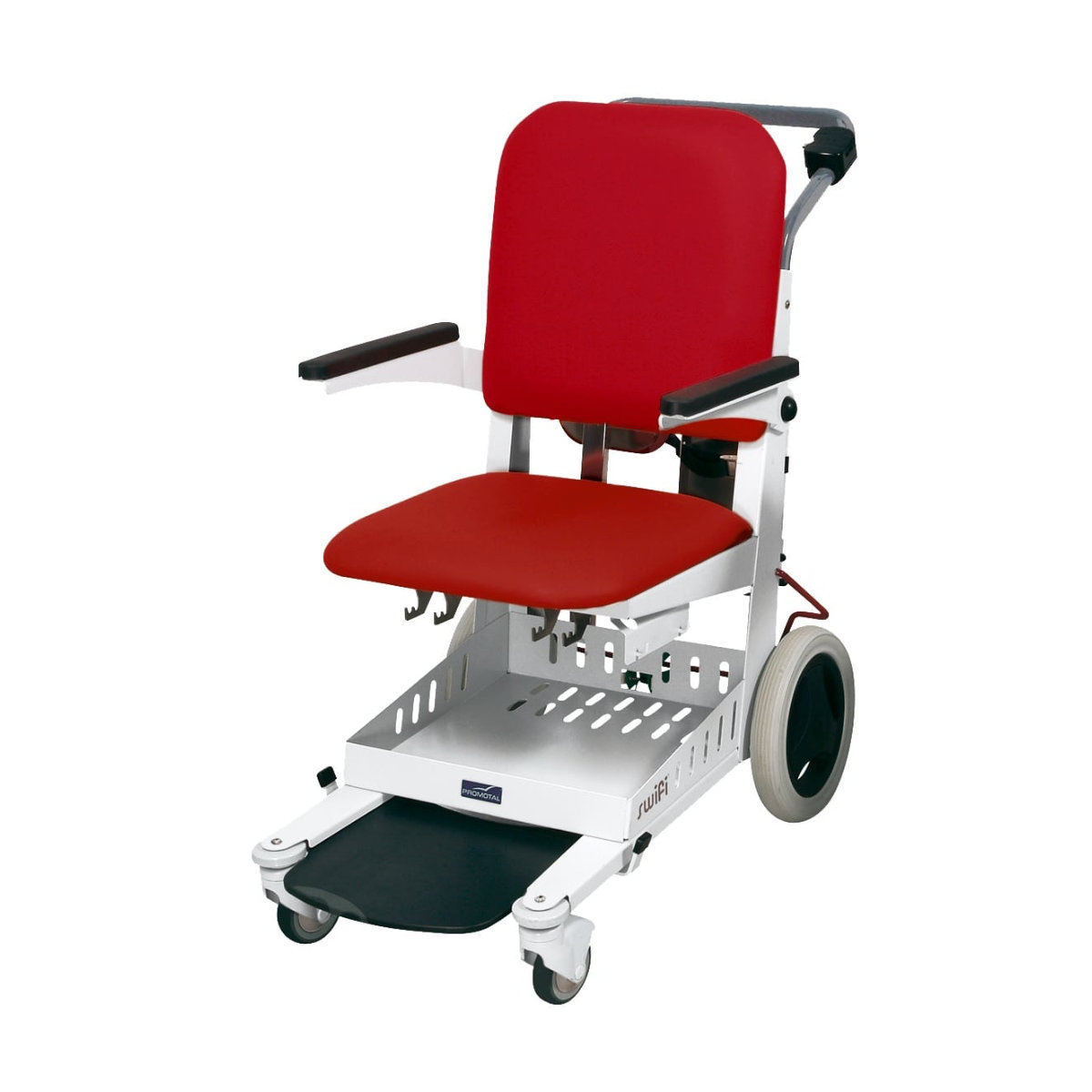
The Swifi is available through Midmed in two seat width configurations (47cm and 60cm), making it suitable for standard patient populations as well as bariatric requirements. Confirm current availability and lead time with a Midmed sales consultant before adding to a capital plan.
Pressure Care: A Capital Conversation Worth Starting in July
Pressure injuries are one of the most closely monitored patient safety indicators in Australian healthcare. They affect patients who are immobile, post-surgical, elderly, or under extended care, and when they occur, they have significant consequences for patient outcomes, length of stay, and clinical workload.
The patient surface is one of the primary tools for pressure injury prevention. Facilities using older static foam mattresses or dynamic systems that are no longer performing as specified are carrying a preventable clinical risk. The start of the financial year is a natural point to assess whether the current mattress inventory reflects contemporary clinical standards and whether a refresh or upgrade belongs in the FY2027 capital plan.
For facilities already operating Hill-Rom, Arjo, or Umano Medical bed infrastructure, the evaluation is relatively straightforward. A compatible alternating pressure mattress system can be introduced without replacing the bed frame, which reduces the capital outlay and simplifies the procurement case.
Wellell Pressure Care Mattress Range
Wellell is a specialist manufacturer of pressure care support surfaces for acute care, aged care, and rehabilitation settings. The range available through Midmed covers the primary clinical scenarios encountered in hospital environments.
Pro-care Auto
Alternating pressure redistribution. Auto-adjusting firmness, Cell-on-Cell air cells, micro low air loss. Under 20 dBA.
Pro-care Auto Bariatric
120cm support surface, 450kg weight capacity. Reinforced torso air cells. Low air loss, dual compressors.
Optima Auto
Backup power maintaining continuous pressure relief for up to 6 hours. Suited to ICU and ward settings.
Optima Turn
Automated 30-degree lateral rotation for high to very high risk patients. Deflatable heel cells and firm side bolsters.
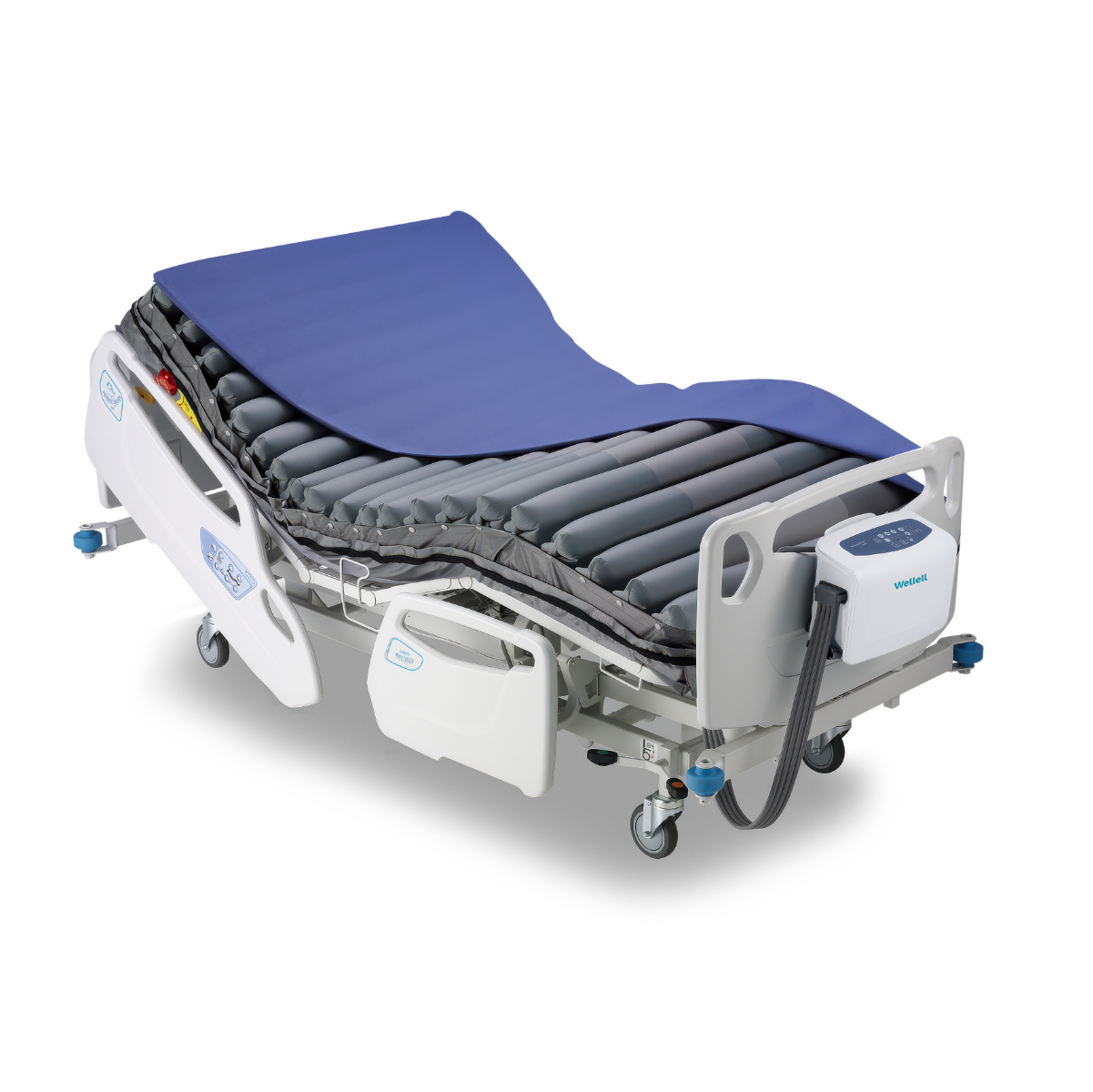
The Wellell range is compatible with a range of standard hospital bed frames. Settings include acute care wards, ICU, aged care, hospice, and day surgery. Confirm which models are suitable for your clinical environment and bed infrastructure by speaking with a Midmed sales consultant. Current availability and lead times can be confirmed at the time of enquiry.
Getting Procurement Decisions Moving
The most common reason equipment reviews stall is not budget. It is process. An initial conversation with a supplier in July can produce a quotation, a datasheet, or a product demonstration that feeds directly into a procurement committee submission. That submission then has a full quarter to progress through approvals before the first Q1 checkpoint.
For capital items such as transfer chairs and pressure care mattress systems, early engagement with the supplier also confirms lead times and delivery windows, which can be relevant for facilities with strict commissioning or replacement schedules.
Midmed sales consultants work with both public and private healthcare facilities across Queensland and Australia. To start an FY2027 equipment conversation, contact Midmed on 1300 643 633, Monday to Friday, 8:00am to 4:30pm AEST, or use the contact form at midmed.com.au/contact.
Frequently Asked Questions
When is the right time to start FY2027 capital equipment procurement?
July is the most effective time to begin. Capital items often require quotation, committee approval, and delivery lead time. Starting in July gives a full quarter before Q1 budget reviews, and avoids the compression that occurs when evaluation is deferred to October or later. Facilities that begin supplier conversations in July are generally better positioned to finalise orders in August or September.
What is the difference between a capital equipment review and a consumable review?
Capital equipment refers to durable clinical items with a higher unit cost, typically requiring separate budget approval and a procurement process involving quotation or tender. Examples include transfer chairs, emergency carts, and clinical furniture. Consumables are disposable or lower-cost items managed through supply contracts or standing orders. The two categories follow different approval pathways and should be reviewed separately to avoid process delays.
How do I assess whether a transfer chair meets bariatric requirements?
The primary specifications to confirm are working weight capacity and seat width. A chair intended for bariatric use should meet or exceed the facility's patient weight thresholds and provide sufficient seat width for safe positioning. Side-loading access, via liftable armrests, is also relevant for bariatric transfers where lateral approach is required. Confirm the specific product specifications with the supplier before purchase and verify against your facility's bariatric patient handling policy.
Can Midmed supply both capital equipment and consumables for a facility?
Yes. Midmed distributes capital equipment, pre-hospital equipment, and clinical consumables across public and private healthcare facilities in Australia. For facilities looking to consolidate supplier arrangements, speak with a Midmed sales consultant about the full range available and applicable government supply contracts.
What government supply contracts does Midmed supply under?
Midmed supplies under a number of Queensland government and national health supply contracts. Contact a Midmed sales consultant to confirm which contracts apply to your facility and product category.
References and Further Reading
- Safe Work Australia: Guide for managing the risks of manual tasks
- Queensland Health: Manual tasks risk management guidance
- Australian Commission on Safety and Quality in Health Care
Start your FY2027 equipment conversation
Midmed sales consultants work with public and private healthcare facilities across Australia. Contact us to request a quote, product datasheet, or availability confirmation.